
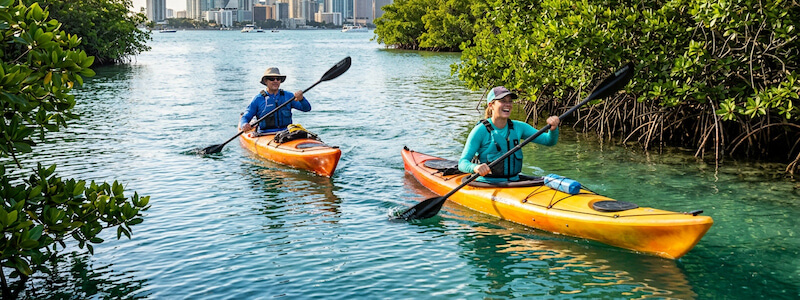
Raccoon Island, formally mapped as Sandspur Island, occupies an odd conceptual space in contemporary urban mythos. The 15-acre landmass floats in Miami’s Biscayne Bay, completely synthetic in origin. It was birthed from discarded sediment during 1970s dredging projects. Yet, this mound of dredged sand now operates as a destination for modern, informal pilgrimage.Following the devastation of Hurricane Andrew in 1992, displaced raccoons supposedly rode storm debris across the water and colonized the dense mangroves. They never left. Today, tourists and locals navigate kayaks through the bay channels to reach them, treating the crossing like a ritual purification away from the city's commercial sprawl. The island acts as a hard boundary separating the profane mainland from a perceived sacred wilderness. This interaction models how secular societies instinctively sanctify natural spaces. There are no altars here. The reverence is directed entirely at the animals. Visitors routinely arrive carrying contraband offerings of fresh fruit or bottled water. Even though Florida wildlife regulations strictly penalize feeding the population, the human compulsion to commune and nourish overrides the law. Creatures normally demonized as alleyway scavengers are temporarily elevated to respected, protected hosts. Ecotourism here crosses into a rudimentary form of animism.The journey requires physical intention. Whether by paddleboard or small motorboat, reaching the shore demands effort. Raccoon Island remains a fascinating case study in spontaneous place-making. It demonstrates that even on a fake island made of harbor sludge, people will inevitably find something wild to revere.
Categories: